 Baptism guide · Greece
Greek Orthodox Baptism, A Complete Guide
A Greek Orthodox baptism welcomes a child into the Church and into the wider family. This guide explains the ceremony, the role of the godparent, what you need to prepare and how to plan for beautiful photos.
Check availabilityAt a glance
- Ceremony length: Usually 45 to 60 minutes
- Typical age: Most children are baptized before the age of two
- Most popular days: Saturdays and Sundays, from spring to autumn
- Key person: The nonos or nona (godparent)
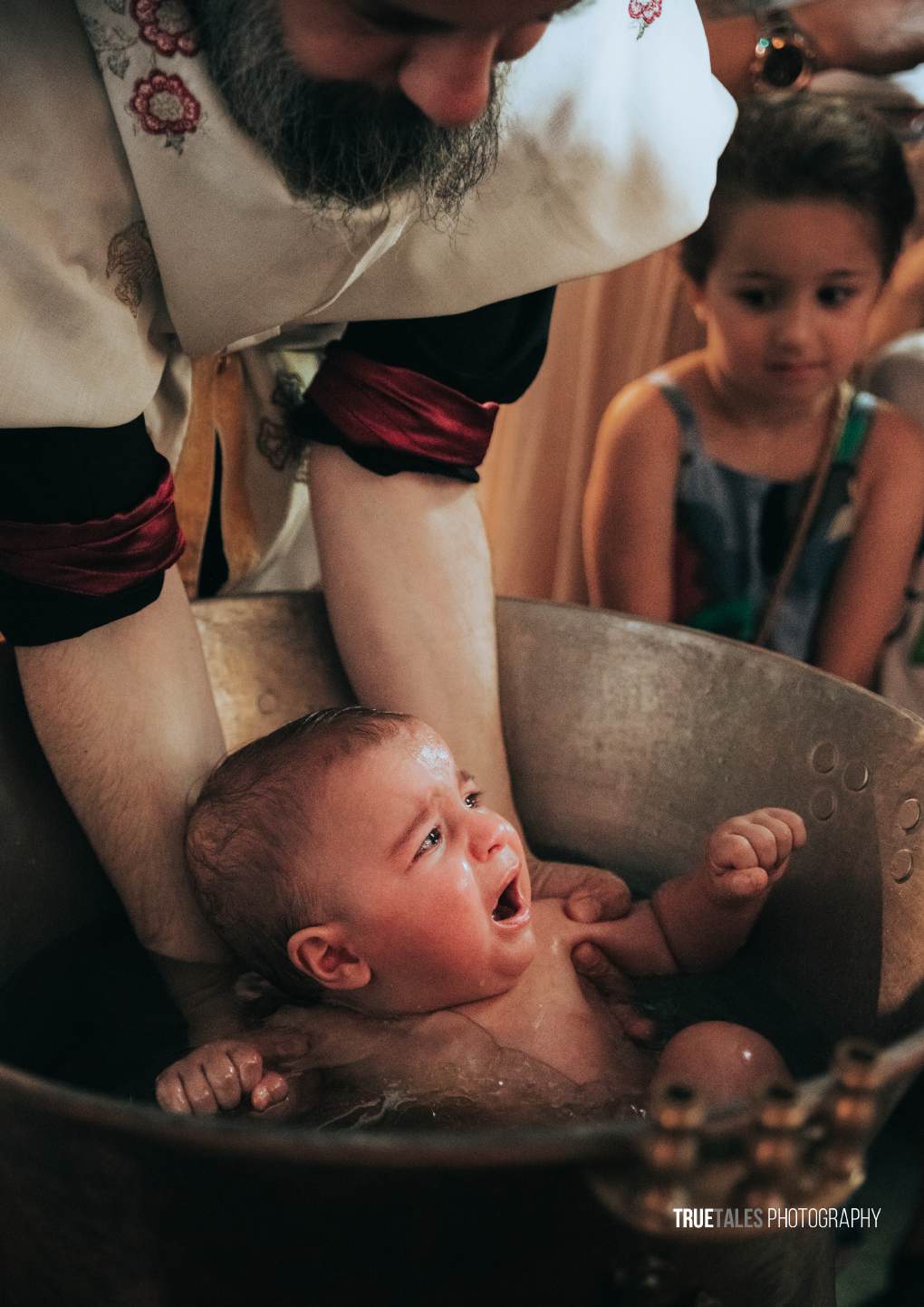
- Main moment: The triple immersion in the baptismal font
- The child’s name: Officially given during the ceremony
The role of the godparent
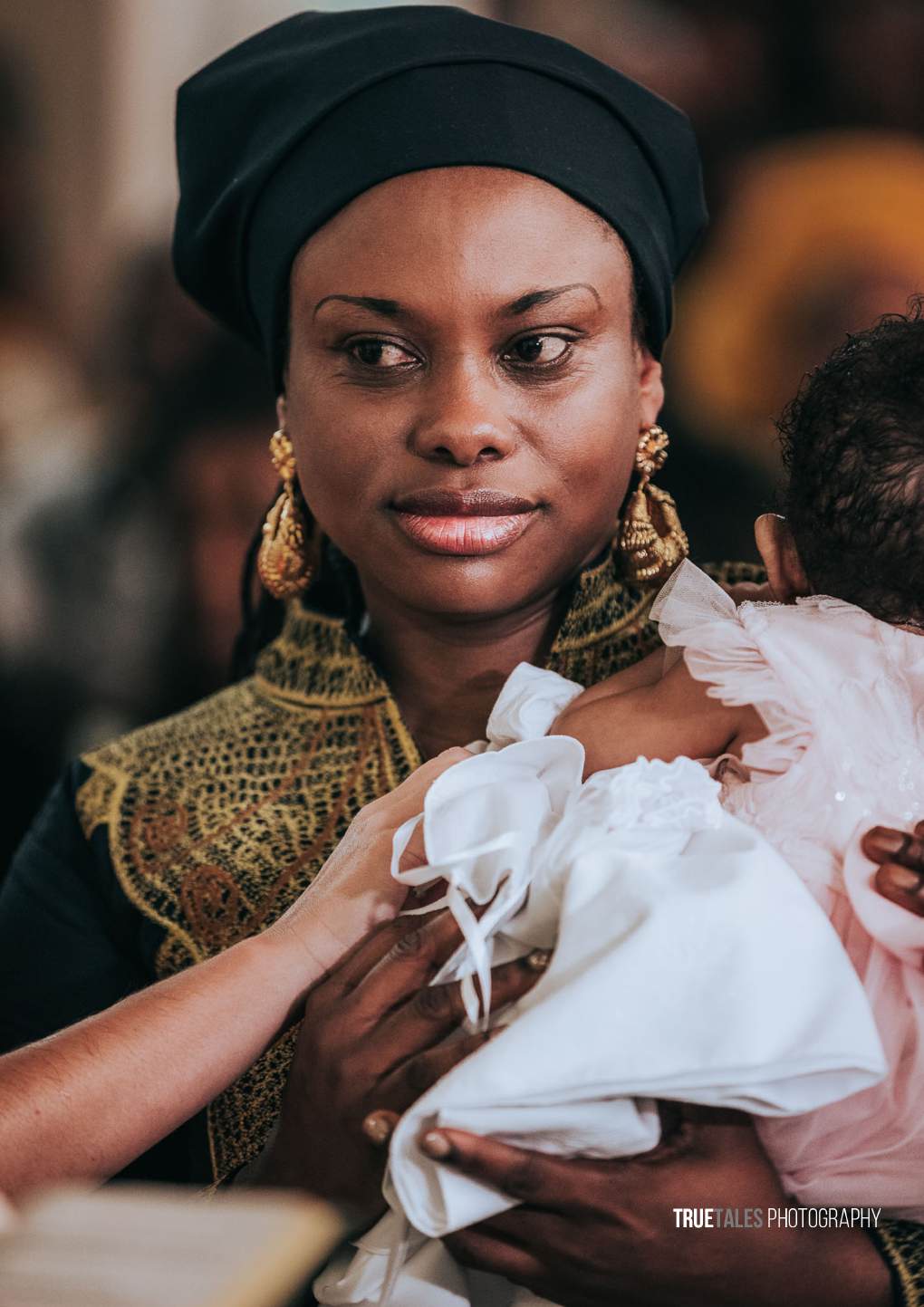
The godparent (nonos or nona) speaks on behalf of the child during the ceremony and takes on a lifelong spiritual role. By tradition, the godparent also prepares and pays for many of the baptism items. Customs differ between families and regions, so it is always worth agreeing on the details early.
What you need for the baptism
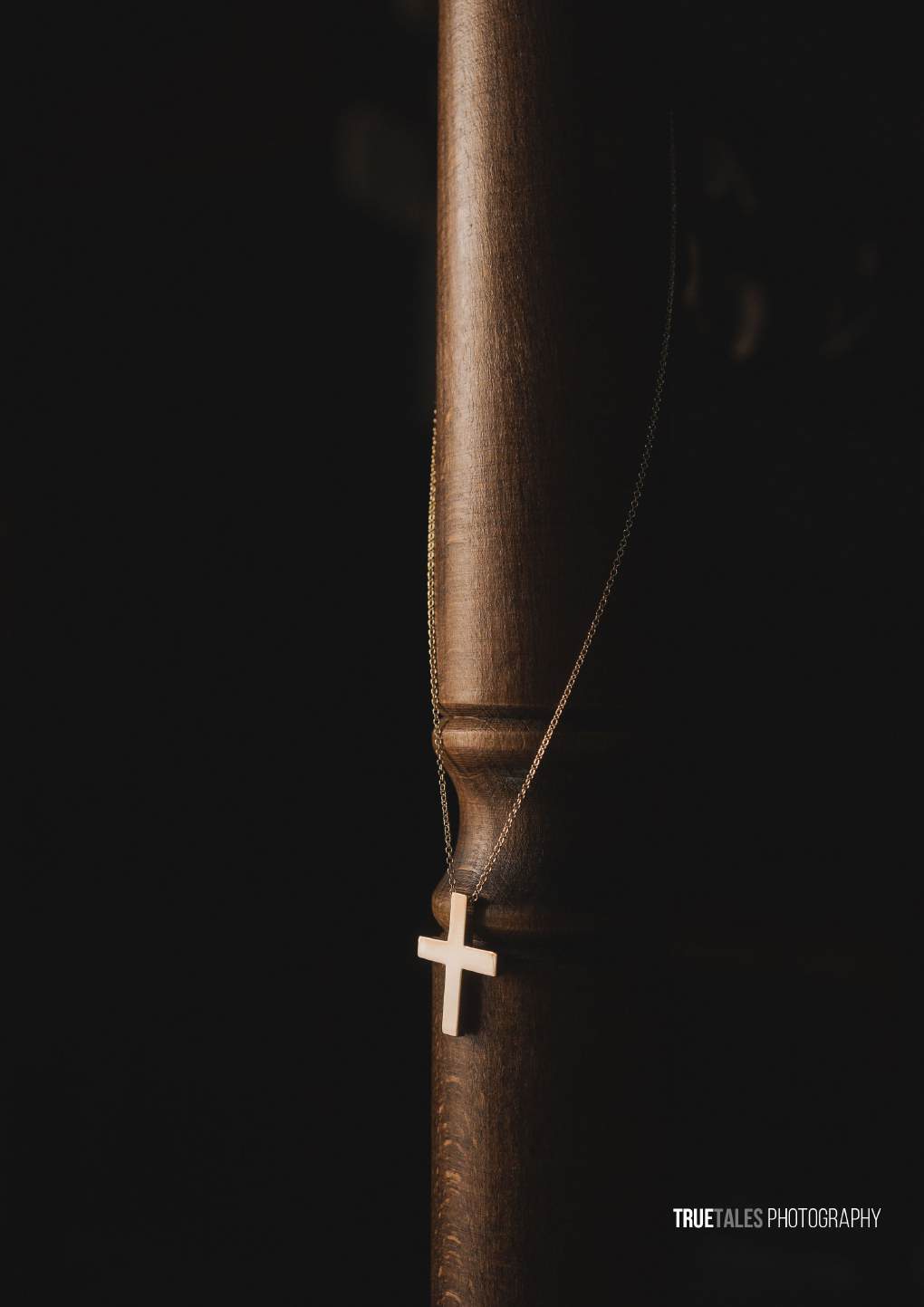
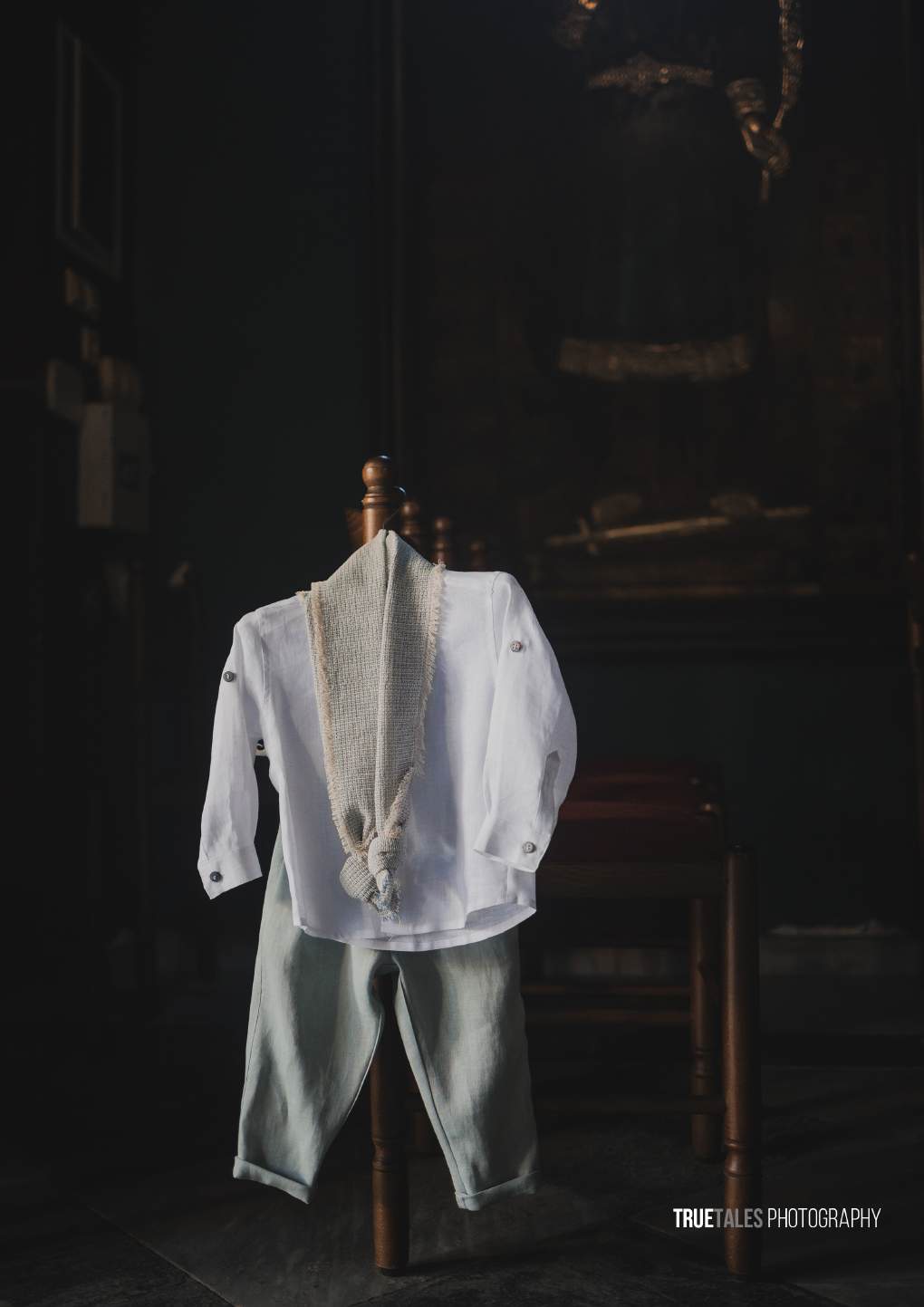
These are the items traditionally prepared for a Greek Orthodox baptism. Many families buy them as a set from a baptism shop.
- Ladopana: the white towels and sheet used after the immersion
- Olive oil: for the anointing
- Lambades: the decorated baptism candles
- The baptism outfit: new white clothes the child wears after the immersion
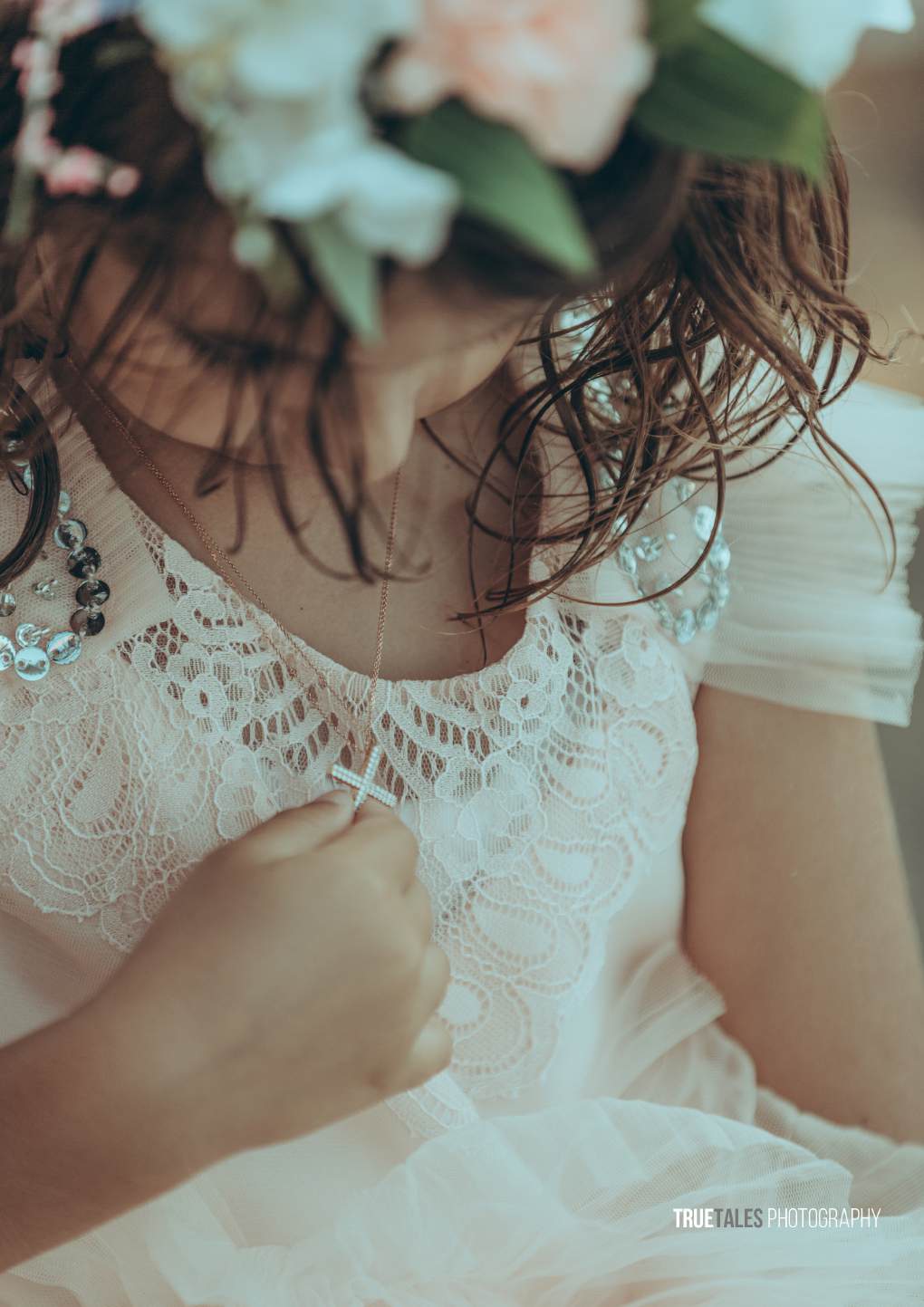
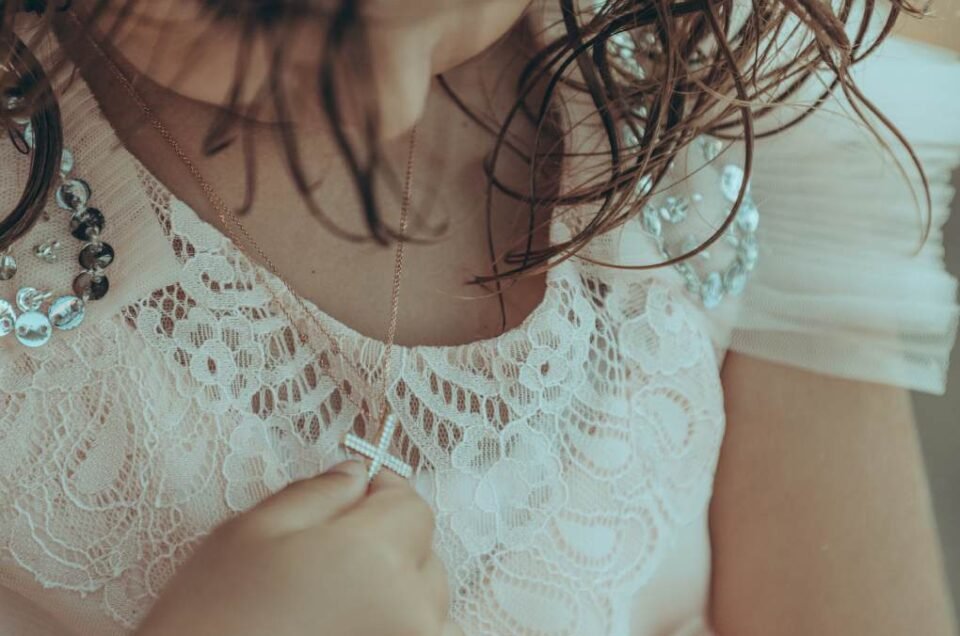
- The cross: usually given by the godparent
- Martyrika: small witness pins or favors given to every guest
- Bombonieres: favors with sugared almonds, often for the reception
You will also need to arrange the church and the necessary documents with the parish in advance. Each parish will tell you exactly what it requires.
The ceremony, moment by moment
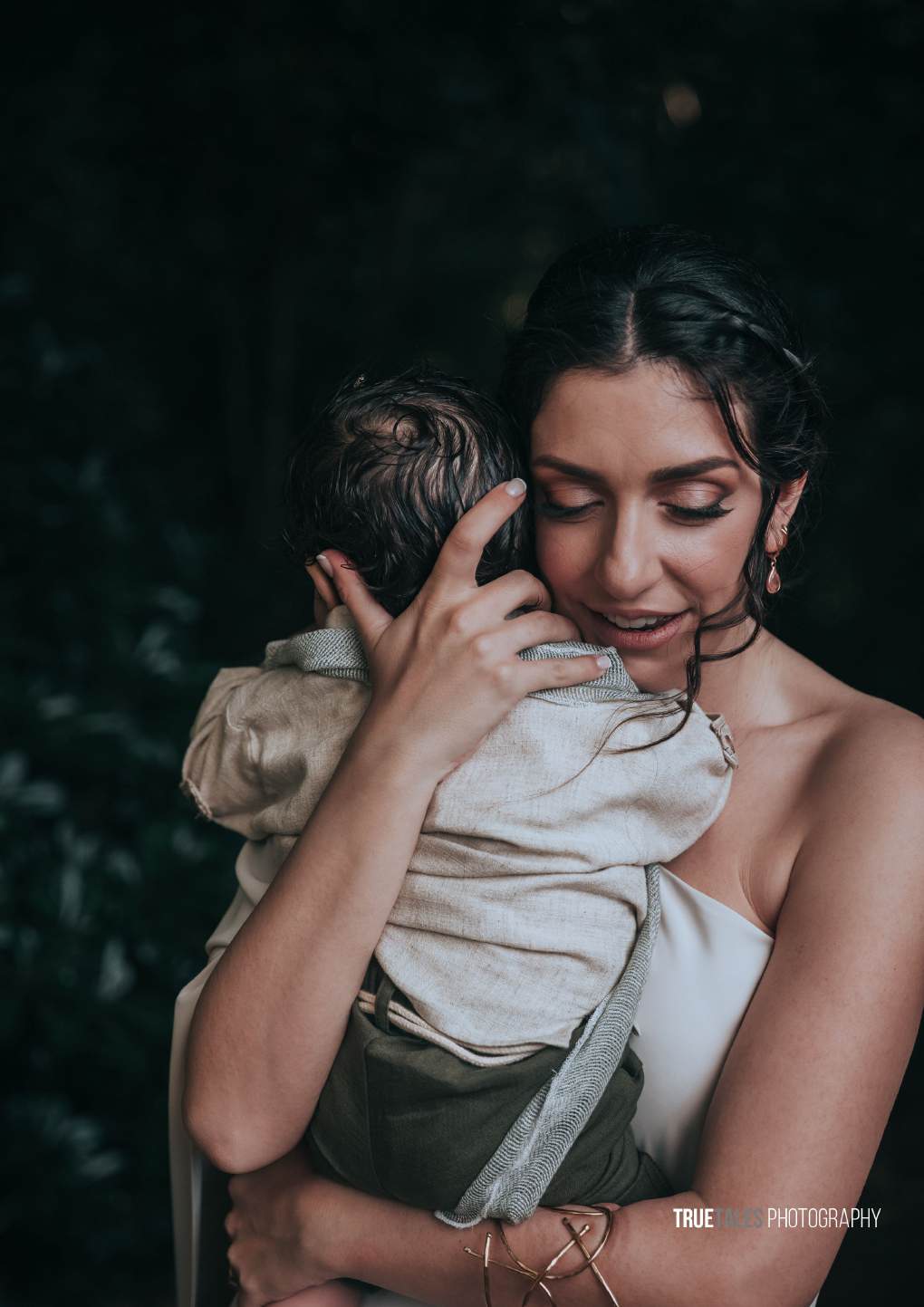
- Welcome at the entrance. The godparent holds the child at the back of the church while the priest begins the service.
- The renunciation and the Creed. The godparent renounces evil on the child’s behalf and recites the Creed.
- Undressing the child. The baby is undressed and wrapped in a towel, ready for the font.
- Blessing of the water and the oil. The priest blesses the water and anoints the child with oil.
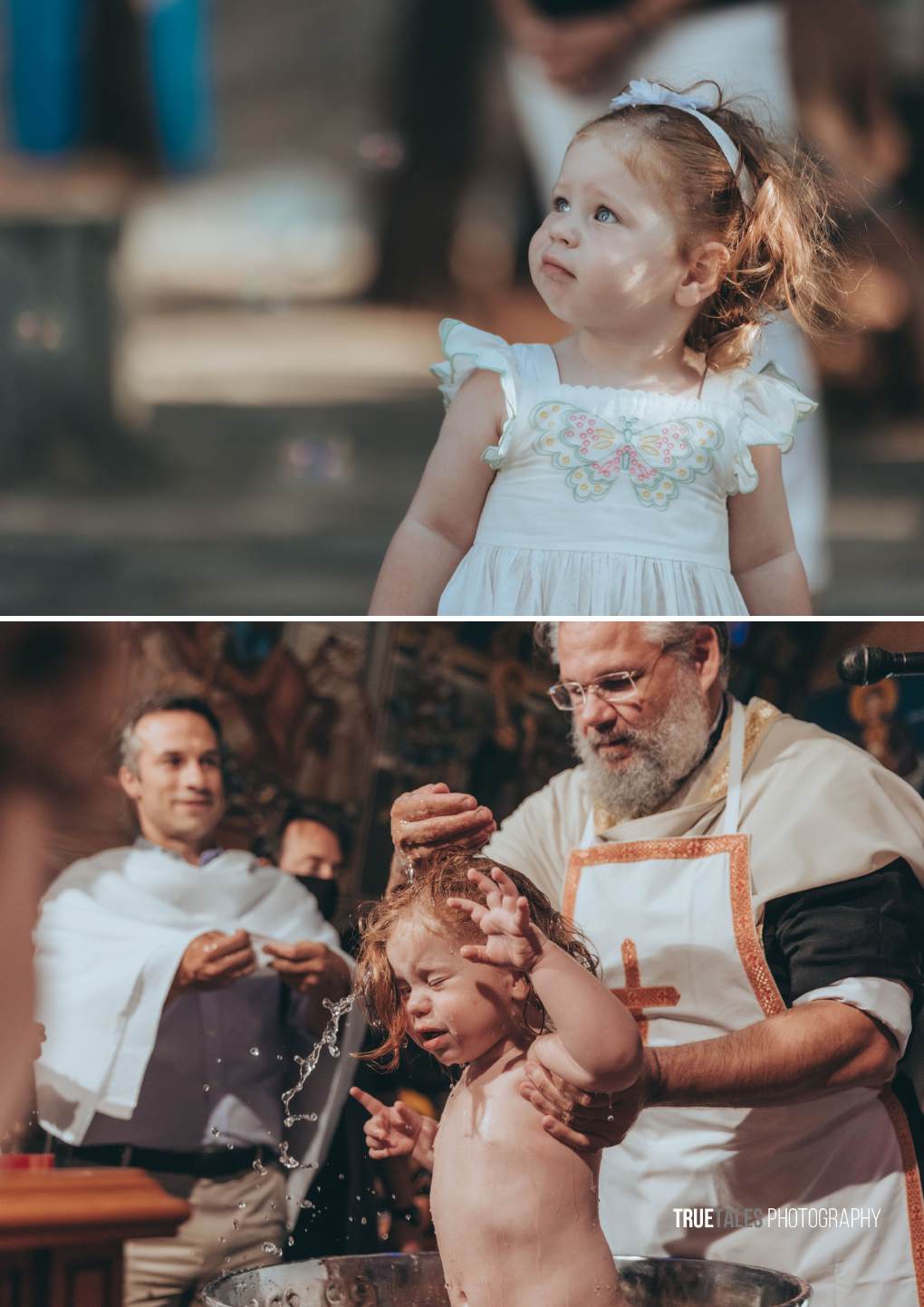
- The triple immersion. The priest immerses the child three times in the font and says the child’s name. This is the most emotional moment of the day.
- Chrismation and the new clothes. The child is anointed with holy chrism, dressed in new white clothes and receives the cross.
- The procession. The godparent carries the child three times around the font, followed by children holding the candles.
- Communion and congratulations. The child receives Holy Communion for the first time, and guests receive their martyrika.
Planning the photos

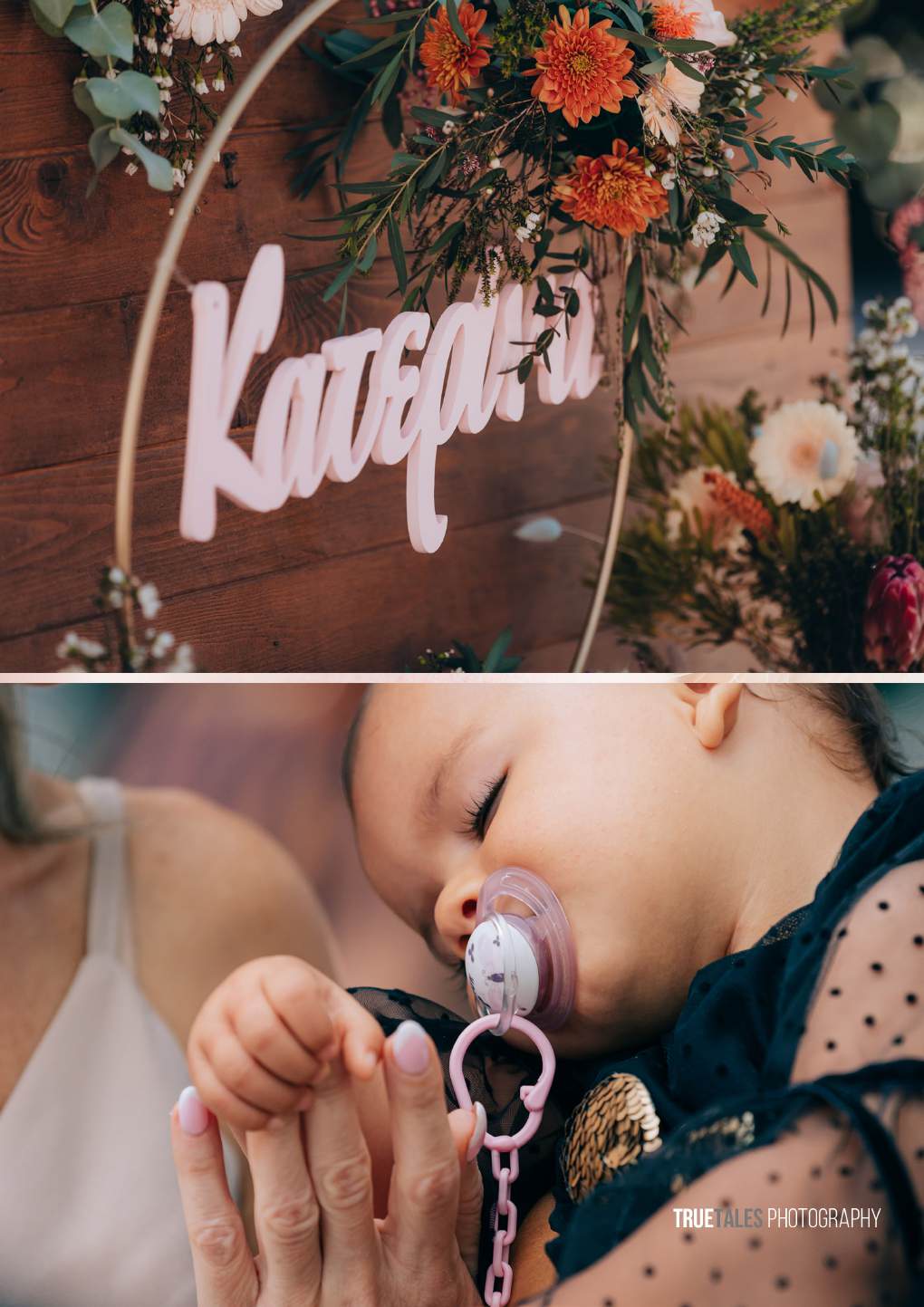
- Arrive early. We like to photograph the decoration, the font and the details before guests arrive.
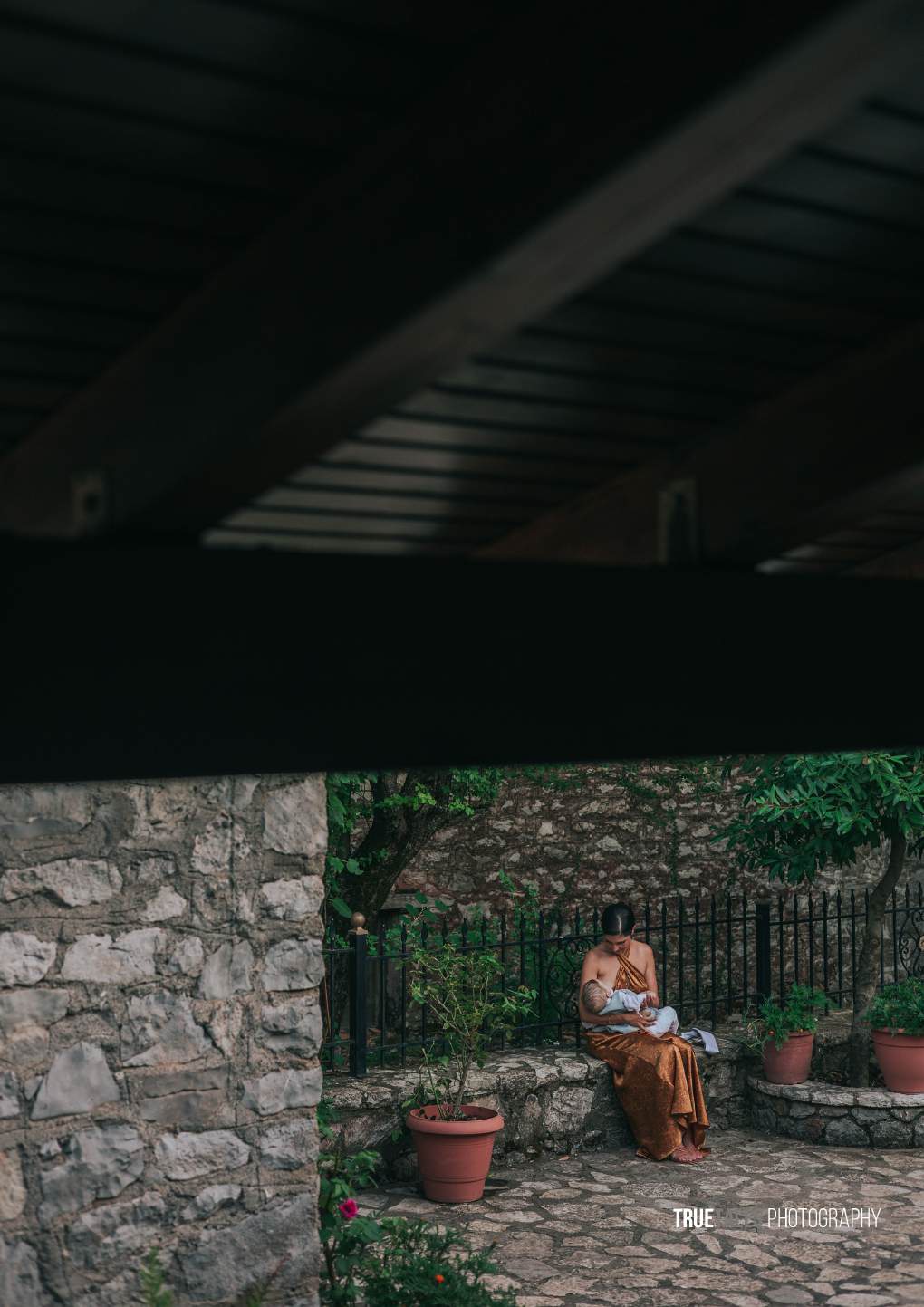
- Keep the baby comfortable. A fed, rested baby makes the day easier for everyone. Plan feeding times around the ceremony when you can.
- Warm water matters. Ask the church to warm the water in the font. A calmer baby means softer, happier photos.
- Plan family portraits. Agree on a short list of family groups, so portraits after the ceremony take 15 minutes and not 45.
- Think about the light. Many churches are dark. We work mainly with natural light and use flash discreetly, only when allowed.
Sea and destination baptisms
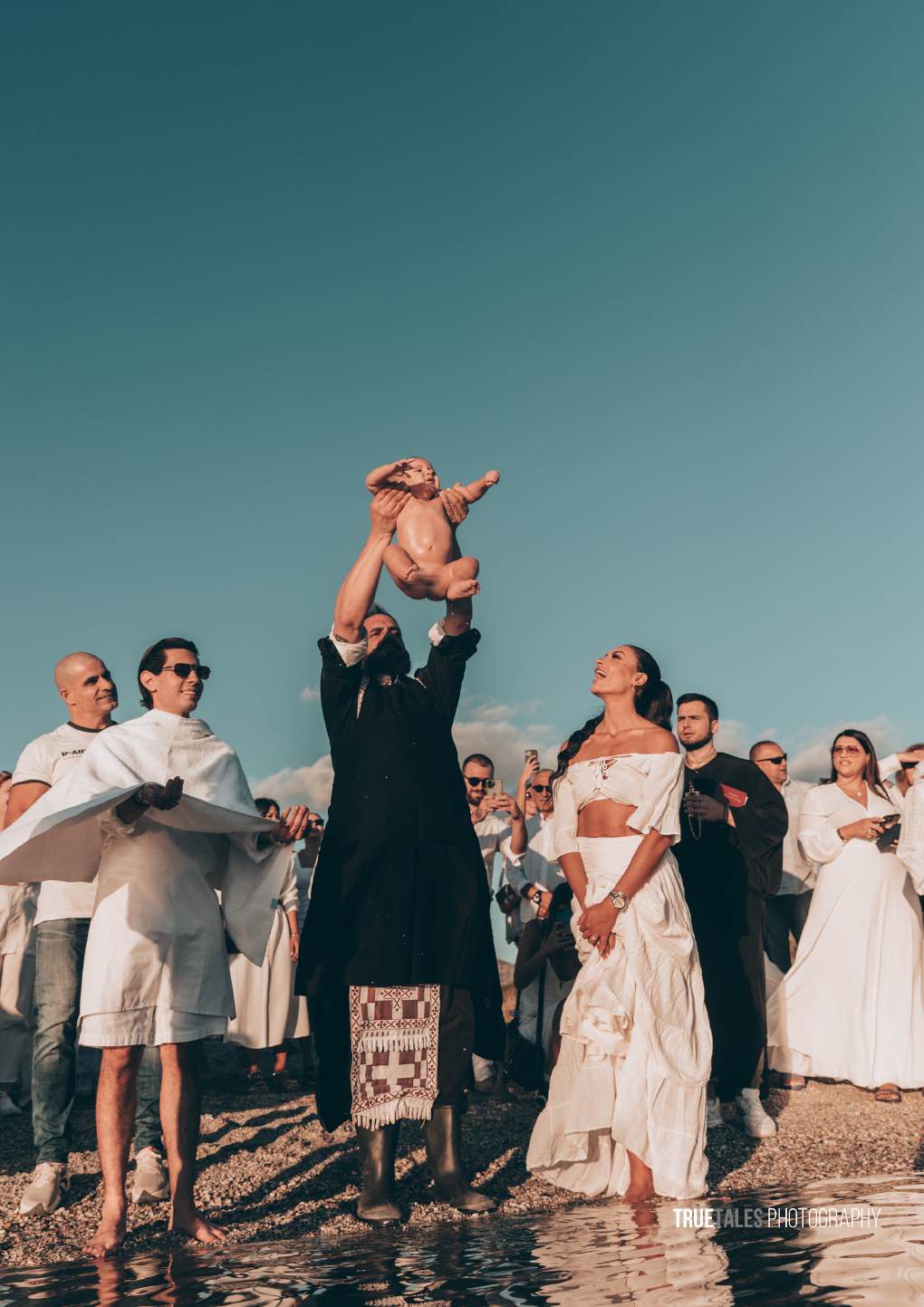
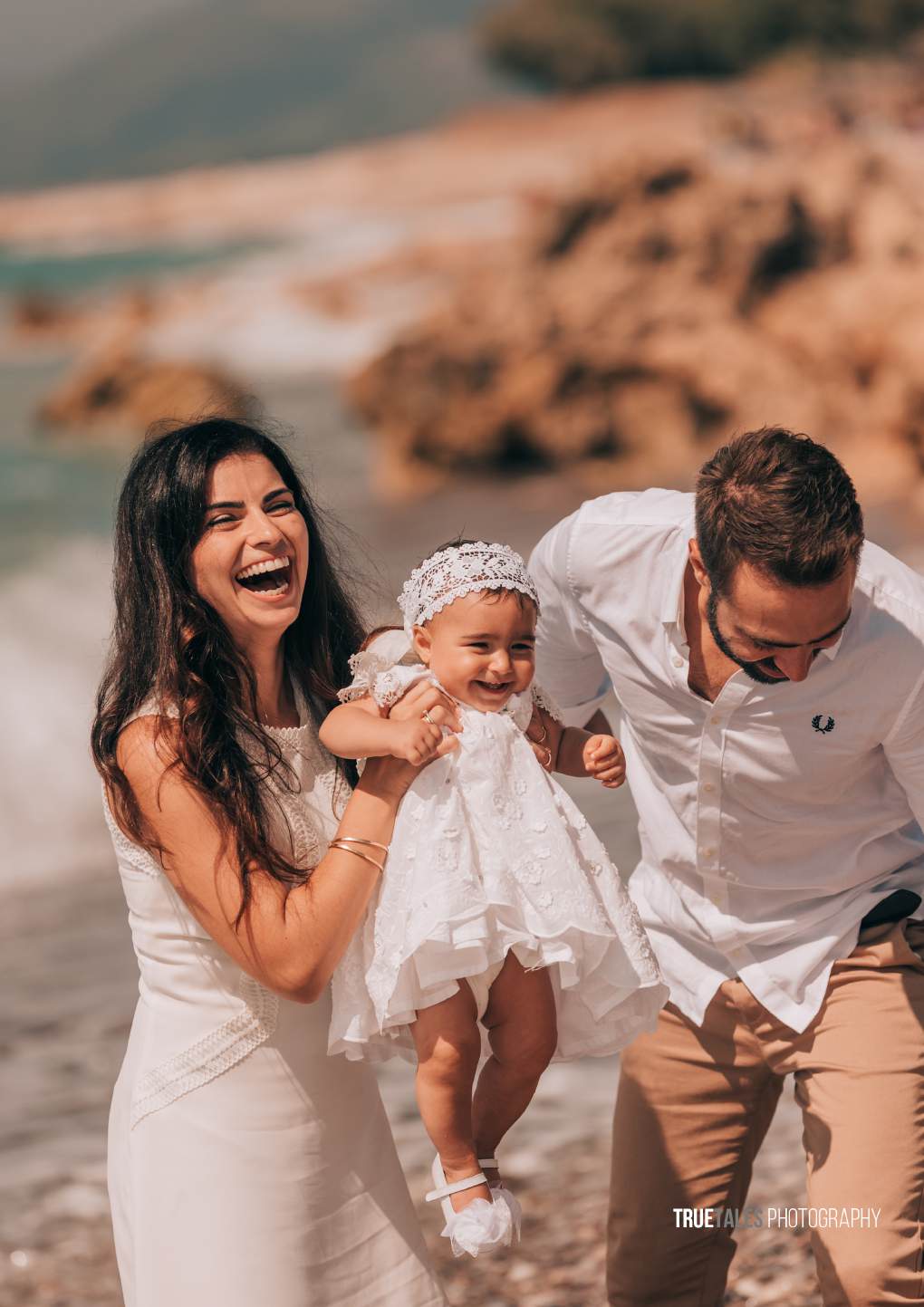
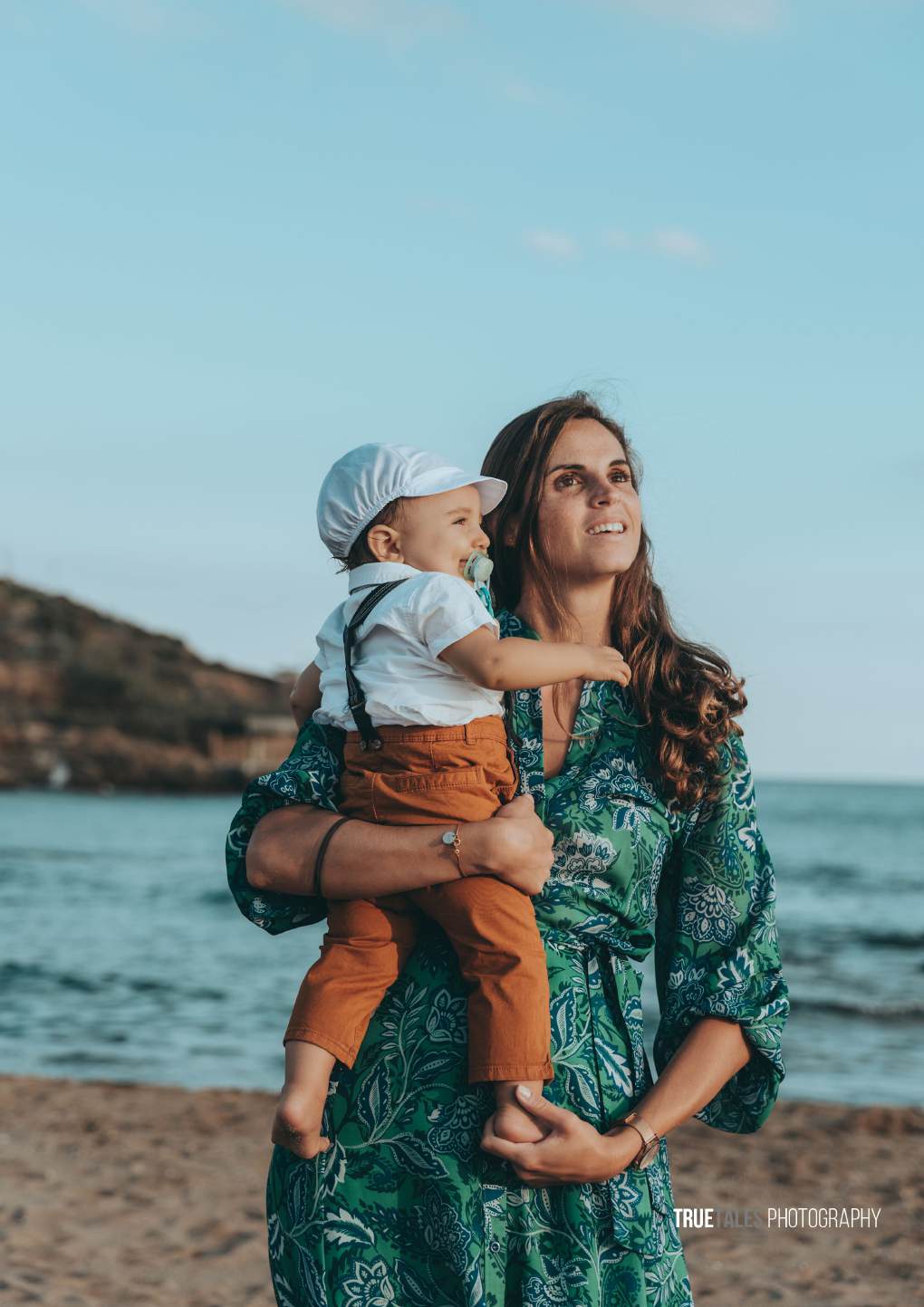
Some families choose a chapel by the sea or a baptism on an island, especially families from abroad returning to Greece. A sea baptism takes more planning with the priest and the weather, but the photos are unforgettable. Read about a sea baptism in Greece we photographed.
Frequently asked questions
How long does a Greek Orthodox baptism take?
The ceremony usually lasts 45 to 60 minutes. With photos before and after, plan about two hours at the church.
What does the godparent pay for at a Greek baptism?
By tradition, the godparent usually provides the baptism items, such as the ladopana, candles, outfit, cross and martyrika. Customs vary by family and region, so agree on it in advance.
What are martyrika?
Martyrika are small witness pins or favors given to every guest. Wearing one shows that the guest witnessed the baptism.
When is the child’s name announced?
The child’s name is officially given during the ceremony, when the priest says it at the immersion.
Is flash photography allowed during a baptism?
It depends on the church. We work mainly with natural light and use flash only discreetly and only where the priest allows it.
How far ahead should we book a baptism photographer?
We recommend 3 to 6 months ahead, especially for weekends between April and October.
Planning your child’s baptism?
We photograph Greek Orthodox baptisms across Athens and all of Greece, quietly and naturally. Send us your date and church for a personal proposal.
Contact me